












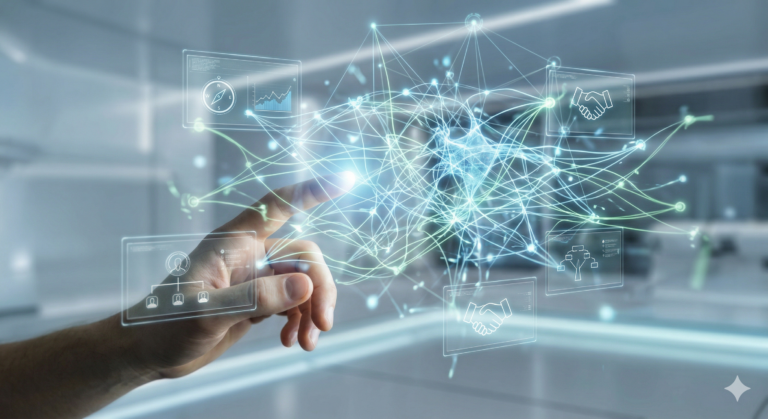
The phrase “Artificial Intelligence” once conjured images of classic sci-fi, either a digital utopia or a dystopian landscape ruled by logic. Today, we stand in a moment where that fiction has become a functional reality. We’ve moved rapidly from “Can AI generate this text?” to “How is AI remaking our world?”
If the early 2020s were defined by generative AI’s explosive debut, the next decade will be defined by its integration, agency, and personalization. The future of AI is not just about smarter models; it is about invisible intelligence weaving itself seamlessly into the fabric of our lives.
From Chatbots to Proactive Agents
For the past few years, our primary interaction with advanced AI has been through dialogue windows: inputting a prompt, receiving an output. We use it like a highly sophisticated search engine or writing tool. But a fundamental shift is underway.
The next generation of AI will transition from reactive assistants to proactive agents.
https://www.codleo.com/blog/future-ai-agents-predictions-trends-2026
Instead of you asking, “Summarize this long report,” your AI agent will have already read the report in context, created a summary tailored to your priorities, flagged critical information, and drafted a response to the main questions. It will manage complex multi-step processes across different platforms without needing constant direction. Your agent will understand your calendar, your communication style, and your goals, acting as an executive coordinator that knows you intimately.
Ubiquity: The Invisible Interface
AI is currently a very conscious presence; you choose to open an app or navigate to a webpage. In the coming years, that friction will vanish. AI will move “into the background.”
https://www.nguyendigital.co/blog-posts/the-invisible-interface
We are approaching an era where digital intelligence is built into every physical and digital touchpoint. AI will be integrated into augmented reality glasses, giving you instant, contextual information about the world you’re observing. It will embed within city infrastructure to optimize traffic flow and manage energy consumption in real-time. In your home, the AI will adapt the environment to your circadian rhythm or health needs before you even realize you’re tired or cold. The ultimate goal is an interface that requires no input at all because the intelligence already anticipates the need.
Redefining Human-AI Synergy
A common and valid anxiety is that AI will make human skills obsolete. However, a more productive approach—and the one that will likely define success—is focusing on collaboration over competition.
https://www.deloitte.com/us/en/insights/topics/talent/human-capital-trends.html
The future lies in using AI to augment human capabilities. While AI handles data processing, pattern recognition, and rote tasks, it will liberate human talent to focus on creativity, emotional intelligence, strategic judgment, and ethical decision-making. We are not being replaced by algorithms; we are being empowered by them.
Building the Trust Framework
Finally, the future of AI is critically dependent on addressing safety and alignment. As systems gain more autonomy and interact with complex systems, questions of transparency, algorithmic bias, and data governance become paramount.
This isn’t just about technical solutions; it requires a global conversation on ethics and regulation. We must build robust frameworks that define how these systems are allowed to make decisions. The true measure of AI’s future won’t be its computational power, but our ability to deploy it safely and equitable for the benefit of everyone.
The journey ahead is one of partnership. We are designing the intelligent world, and how we choose to integrate this tool will determine the future we build.


0 Comments